
Delay of ECO Currency Not Due to Lack of Political Will, but Technocrats Blocking Progress – ECOWAS Commissioner
By
Kwaku Sakyi-Danso/Ecowasnewsonline.com
Last updated:
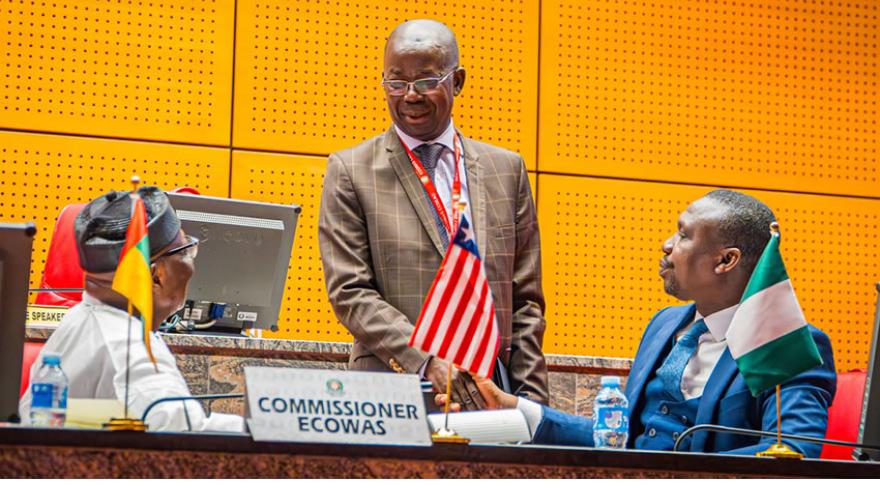
Commissioner Kalilou Sylla says technical hurdles, not political indecision, are the main obstacle to West Africa’s single currency.
The Economic Community of West African States (ECOWAS) has repeatedly pushed back the launch of its proposed single currency, the ECO. But according to the bloc’s Commissioner for Economic Affairs and Agriculture, Dr. Kalilou Sylla, the delays are not a matter of political will.
Speaking at a plenary session on Tuesday, May 9, 2026, Sylla dismissed claims that political reluctance is holding back the long-awaited currency.
“Attributing the delay to political will does not mean anything to me – it’s just empty words,” he said. “When men and women who are well organised impose their desires on politicians, they will move.”
Sylla noted that he is in a unique position to assess the situation, having worked at the ECOWAS Commission 15 years ago before returning as commissioner just three to four months ago.
“If I tell you what I discovered, you will say it’s not possible,” he said. “For five years, they have not agreed on the terms of reference for the central bank. Five years – is that a lack of political will? No.”
Technocrats, not politicians, creating bottlenecks
According to Sylla, the real blockages are technical.
“Often it’s the technical people that block things,” he said, adding that progress has nevertheless been made. “We have a name for the currency.”
He acknowledged that Nigeria’s constitution designates the Naira as its currency, but said acceptance of the ECO as a regional currency is advancing. Another breakthrough: Francophone countries have agreed that the currency should be flexible – a significant shift from the CFA franc’s fixed parity with the euro.
However, several key issues remain unresolved, including governance questions, the location of the headquarters, and the payment system.
“We are having a meeting with the governor of the Central Bank of Nigeria on this matter,” Sylla said. A political task force will ultimately take political decisions.
The current target date for the ECO remains 2027, he emphasised. “We will be meeting with the heads of state to see how we can make progress, but blockages are more technical than anything else.”
Community levy and regional autonomy
Sylla also addressed financing for the region, noting that Nigeria is projected to become the world’s fifth most powerful hub within the next 50 years.
“We are not going to ask people to come and finance us – we need to find internal financing mechanisms,” he said. “Autonomy is an important matter.”
He suggested that the community levy, currently applied only to goods, should be extended to services.
“One reason we are not making progress in ECOWAS is that we know how to draft protocols, but when it comes to implementation, there are difficulties at the borders,” Sylla said. “ECOWAS needs to change its way of working.”
Call for data-driven oversight
Turning to members of parliament, Sylla urged stricter monitoring and evaluation.
“You should not come and tell me about free movement of persons without presenting figures,” he said. “People should present figures.”
He pointed to the new “Compact Summit of the Future” as a step forward, promising concrete data on trade changes of five to ten percent.
“The repositioning of ECOWAS is very important,” Sylla concluded.

© 2024 Ecowas News Online. All rights reserved.
Developed by ReactiveDev